AI product and learning platform
NextGen News
A live, India-focused news and learning product that turns current affairs into calm, sourced, age-appropriate reading for young students.
- Role
- Founder, product, engineering, and publishing systems
- Organization
- Independent
- Period
- 2026 — Present
Live
product
100+
stories in the library as of June 24, 2026
GitHub
showcase repo
Overview
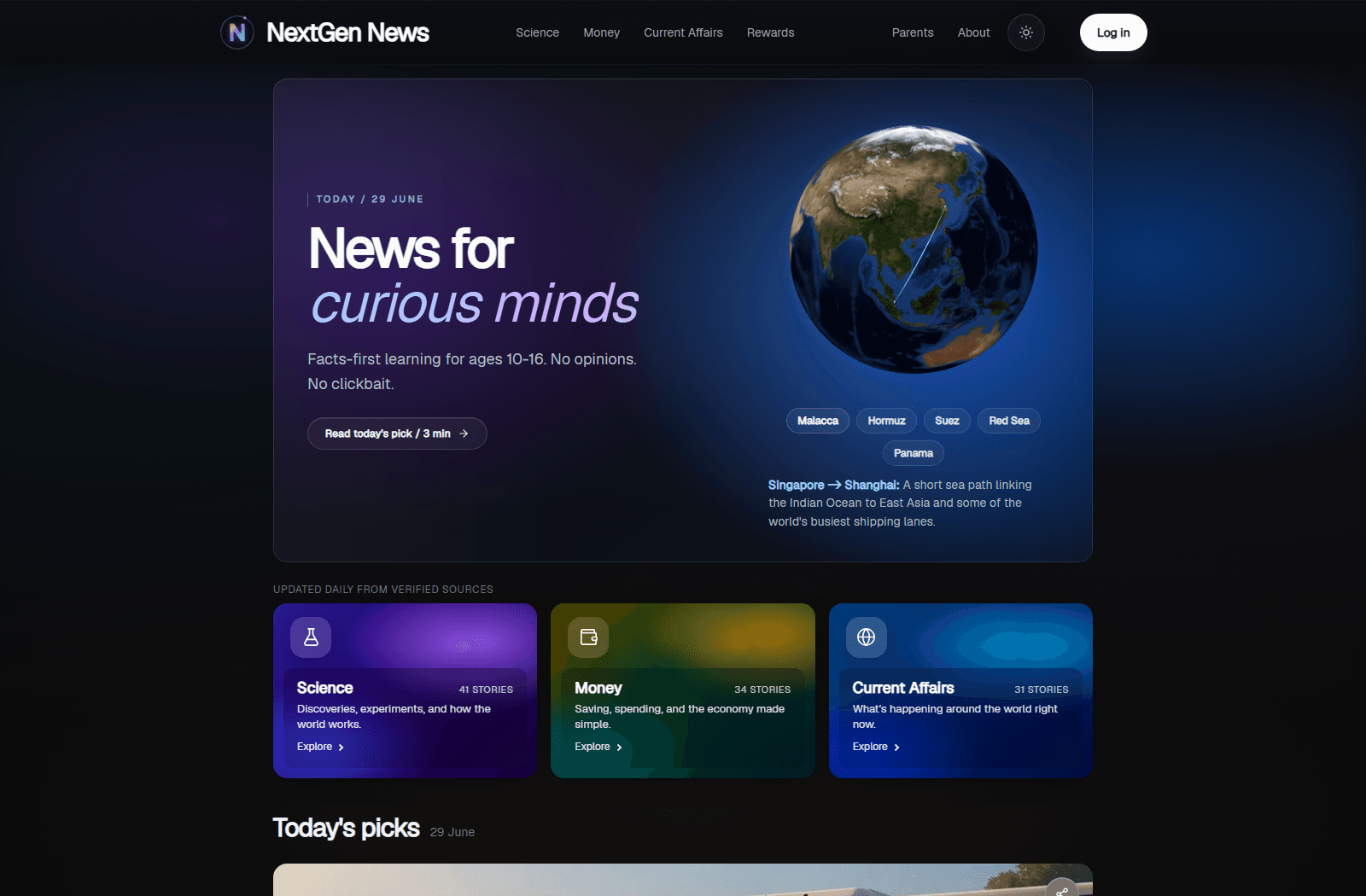
NextGen News is a facts-first news and learning product for readers aged 10–16, with an initial focus on India. It sits between adult news and curriculum products: current enough to explain the world, but calm enough for students, parents, and teachers to trust.
The product includes short stories across Science, Money, and Current Affairs, lightweight quizzes, open reading without a required account, optional progress features, parent accounts, and trust and safety sections.
I keep a separate showcase repository to document the product narrative, screenshots, high-level architecture, and product decisions while keeping production source code, model instructions, secrets, schemas, and operational details private.
Live product
Key screens
A quick tour of the product: home, three libraries, and one full reading experience.
Category library
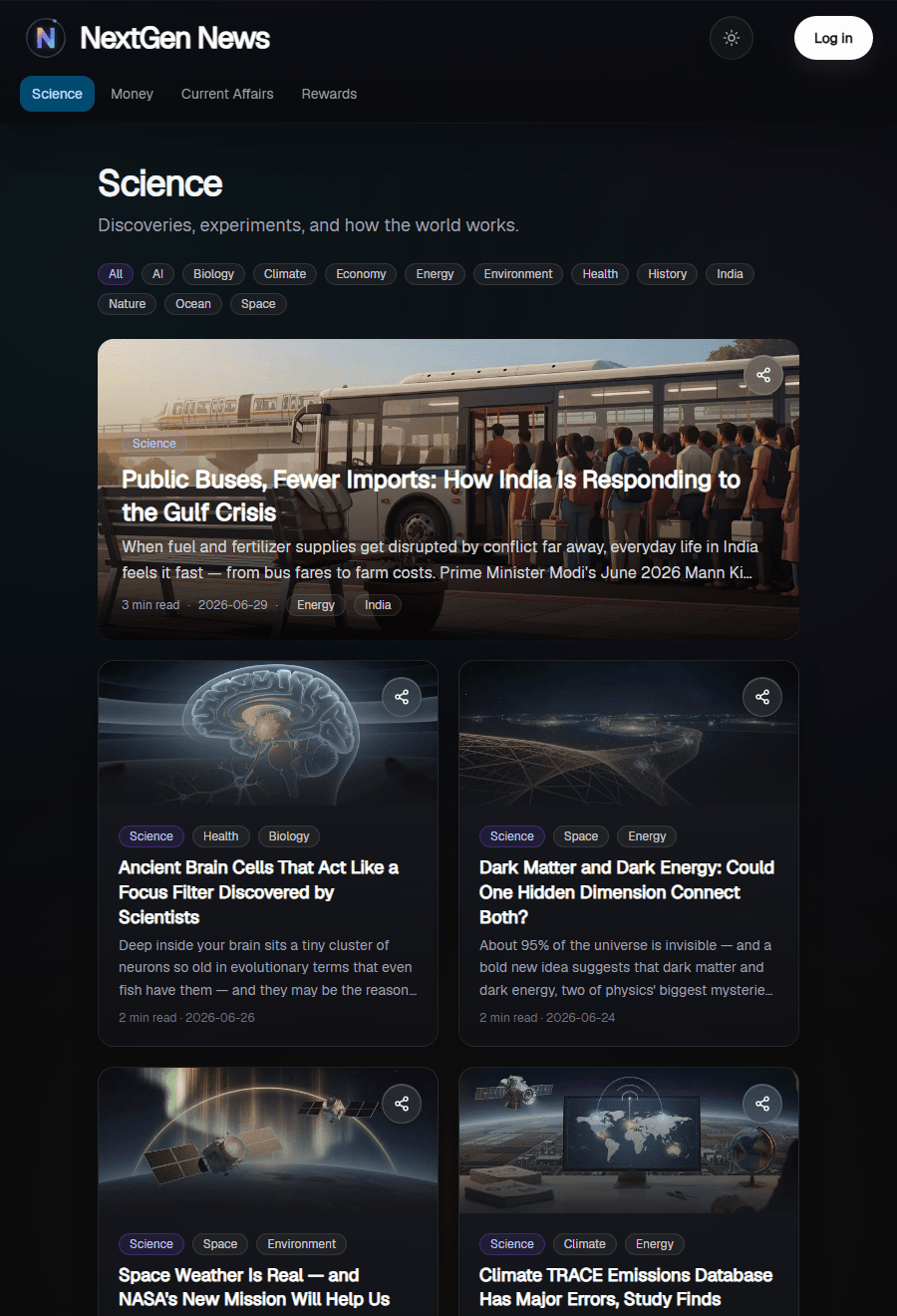
Science
A browsable library for discoveries, experiments, and explainers about how the world works.
Open Science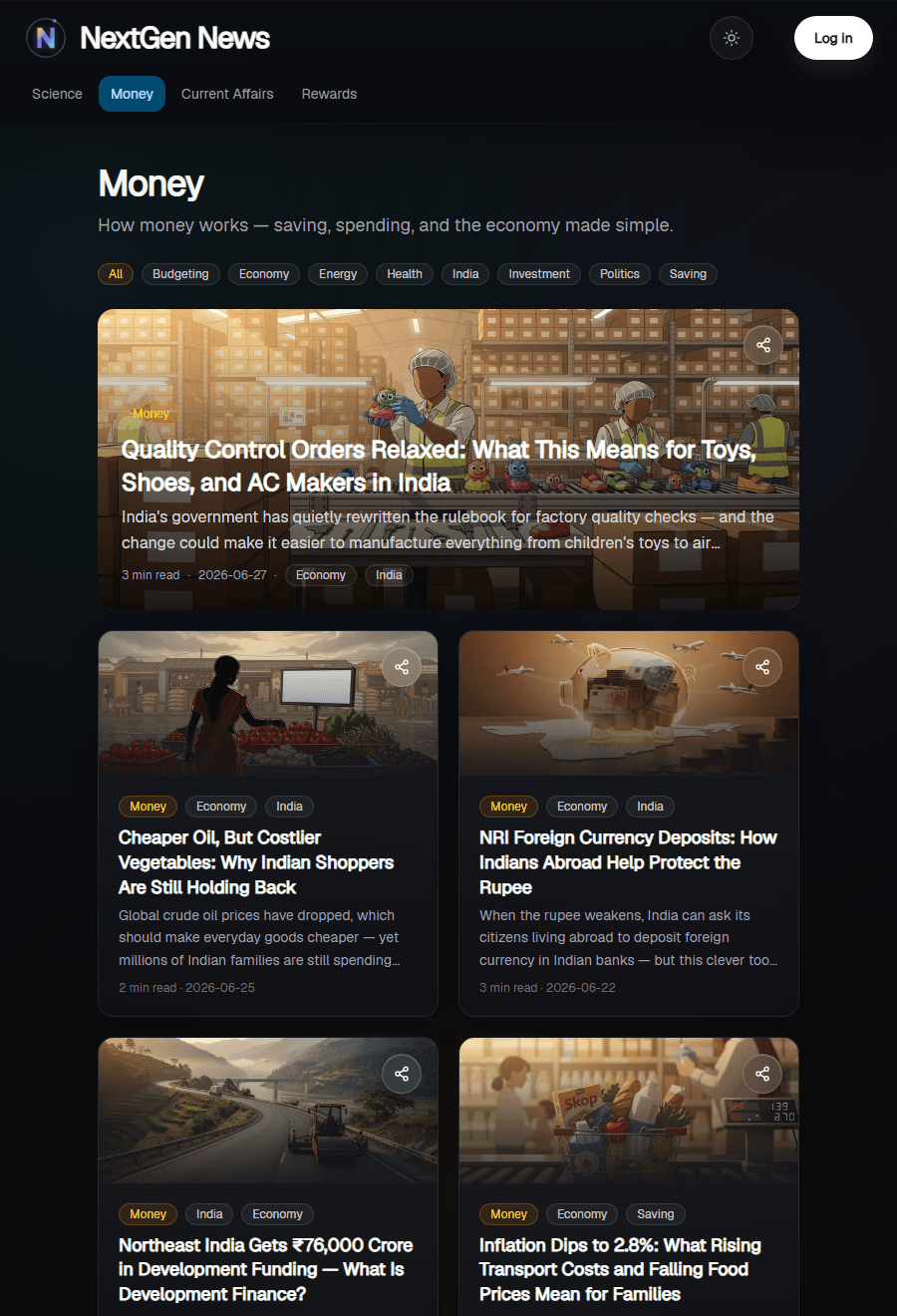
Category library
Money
A money and economy surface written for young readers without adult-news jargon.
Open Money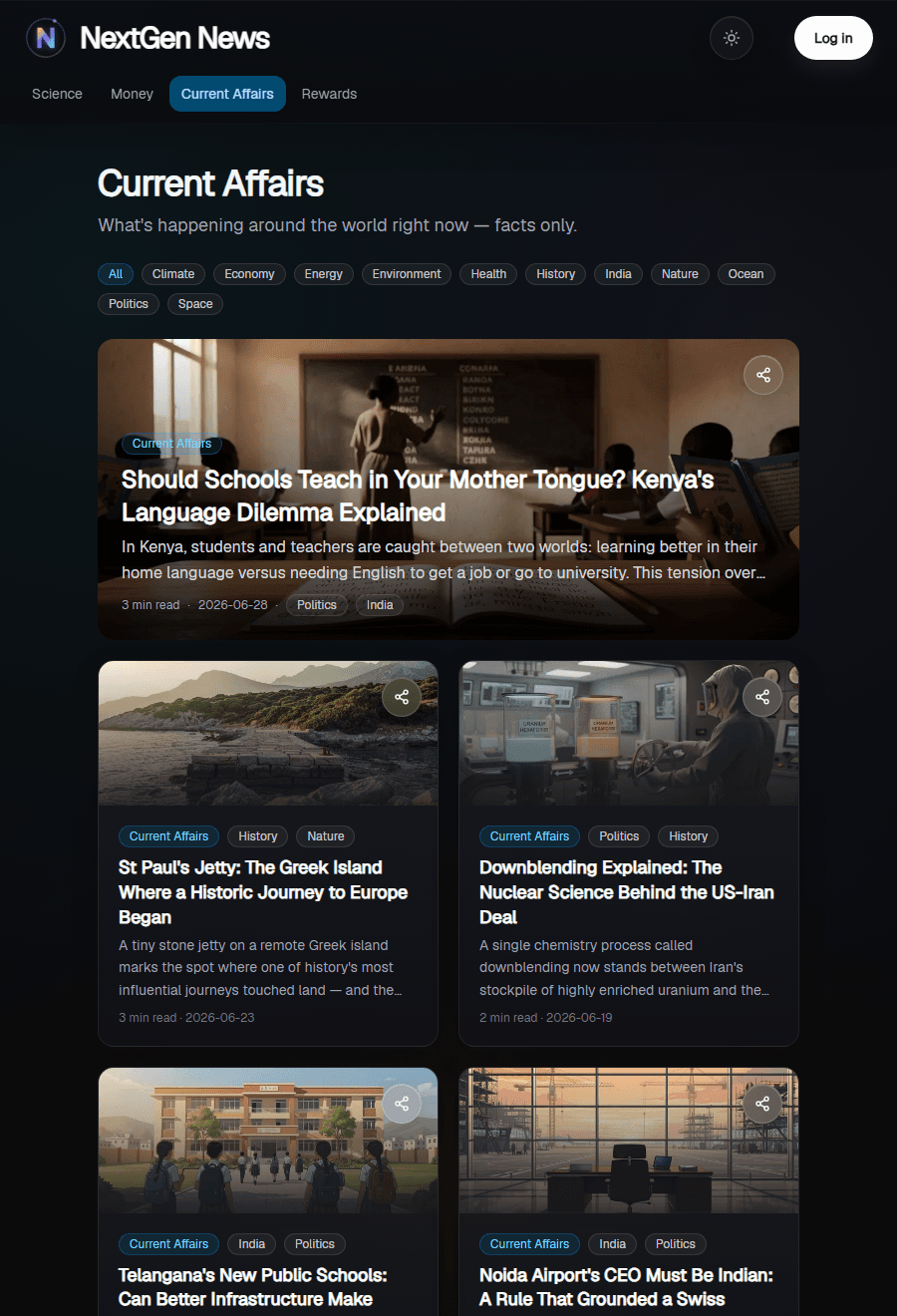
Category library
Current Affairs
A facts-only current-affairs library for global and India-focused stories.
Open Current Affairs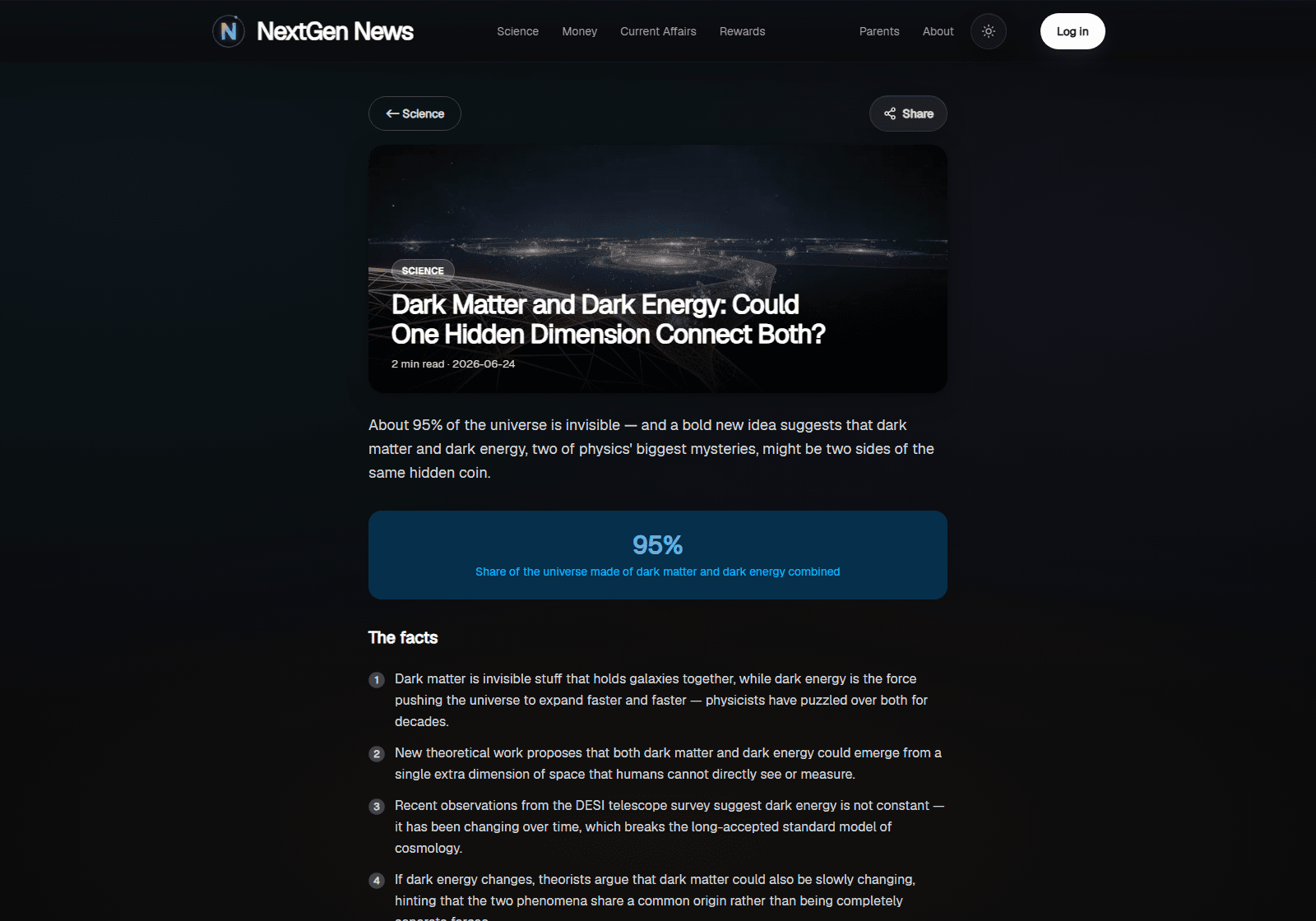
The challenge
- Young readers are curious about science, money, technology, climate, and world events, but the default options are often written for adults, surrounded by social mechanics, or difficult for parents and teachers to evaluate quickly.
- AI can make content production faster, but trust is still a product and engineering problem. Sources, structure, validation, privacy, review, and distribution matter more than generating another block of text.
- A product for minors has to serve three audiences at once: students need clarity, parents need confidence, and teachers need material that can fit into a classroom routine.
Product approach
Design a calm reading surface
Keep the product focused on short explanations, named sources, one key number, why-it-matters explanations, and quizzes instead of comments, profiles, or engagement loops.
Put product rules around AI
Use AI for drafting leverage, then enforce structure, source presence, taxonomy, quiz shape, repetition, and safety through deterministic checks outside the model.
Keep review at the publishing boundary
Route validated content through a reviewable change before publication so judgment-heavy questions—source interpretation, age fit, ambiguity, and tone—stay explicit.
Share safely
The showcase repo explains the product, architecture, and decisions while private code, model instructions, keys, schemas, and operational runbooks stay out of the portfolio.
Outcomes
A live reader experience
Launched with category libraries, story views, quizzes, responsive light and dark interfaces, RSS, sitemap, metadata, and social preview support.
Trust visible in the product
Built the experience around open reading, sourced facts, no social features, plain-language safety and privacy sections, and optional accounts for progress and family features.
A clean external view
Published screenshots, architecture notes, launch context, and product decisions without exposing the private production codebase.
What I took away
The model is only one part of the product. The workflow around it determines whether the output is useful, safe, and trustworthy.
Building the product myself forces every vague idea to become a decision: what to collect, what not to collect, what to automate, what to review, and what promise the product should make to families and schools.
Next case study