University of Michigan × Toyota Research
Solid-State Battery Degradation Research
Computational research on battery aging using multiphysics simulation, finite elements, image-based datasets, and HPC workflows.
- Role
- Research Associate II
- Organization
- University of Michigan Computational Physics Group
- Period
- Dec 2021 — Jul 2023
Toyota
research collaboration
JMPS
peer-reviewed publication
Overview
Before product management, I worked in computational research at the University of Michigan on a Toyota Research collaboration focused on solid-state battery degradation.
The work sat at the intersection of mechanics, numerical methods, image processing, automated meshing, finite elements, and high-performance computing. I co-developed particle-scale simulation workflows and data pipelines to reason about how battery materials degrade over repeated operating cycles.
The project taught me to respect the full stack of simulation work: the physics, the numerical method, the data pipeline, and the judgment needed to decide whether a result is meaningful.
Research visuals
A compact visual path through the work: cell setup, simulation-ready data, mesh abstraction, Li concentration, and fracture behavior.
Simulation sequence
Li concentration evolution
A 36-frame simulation sequence showing how lithium concentration changes across a multi-particle solid-state battery configuration.
A lightweight way to show the evolution without forcing the reader through dense plots or tables.

Physical system
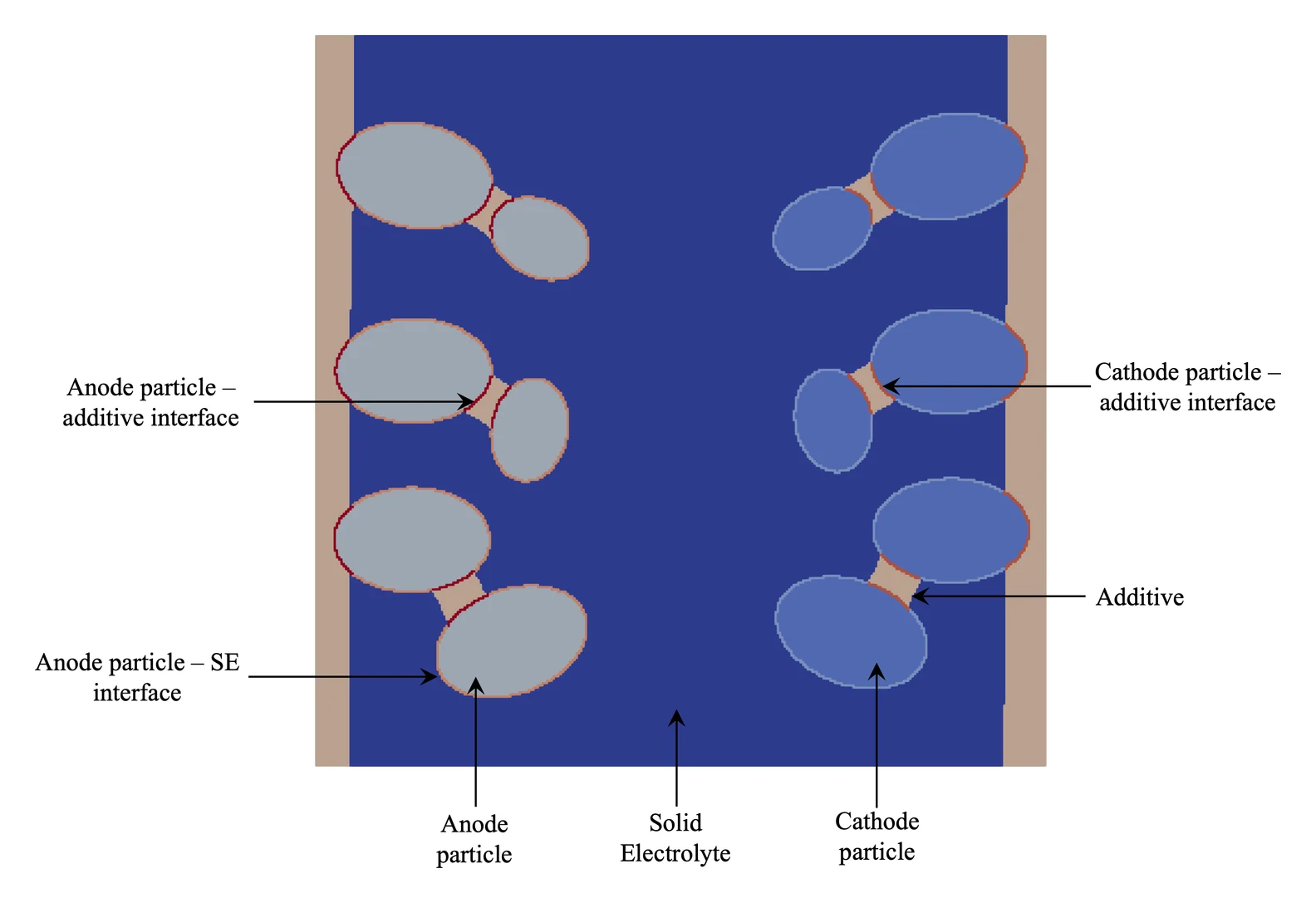
Multi-particle cell configuration
The model represents active particles, solid electrolyte, and additive interfaces where degradation can affect transport.
Data preparation
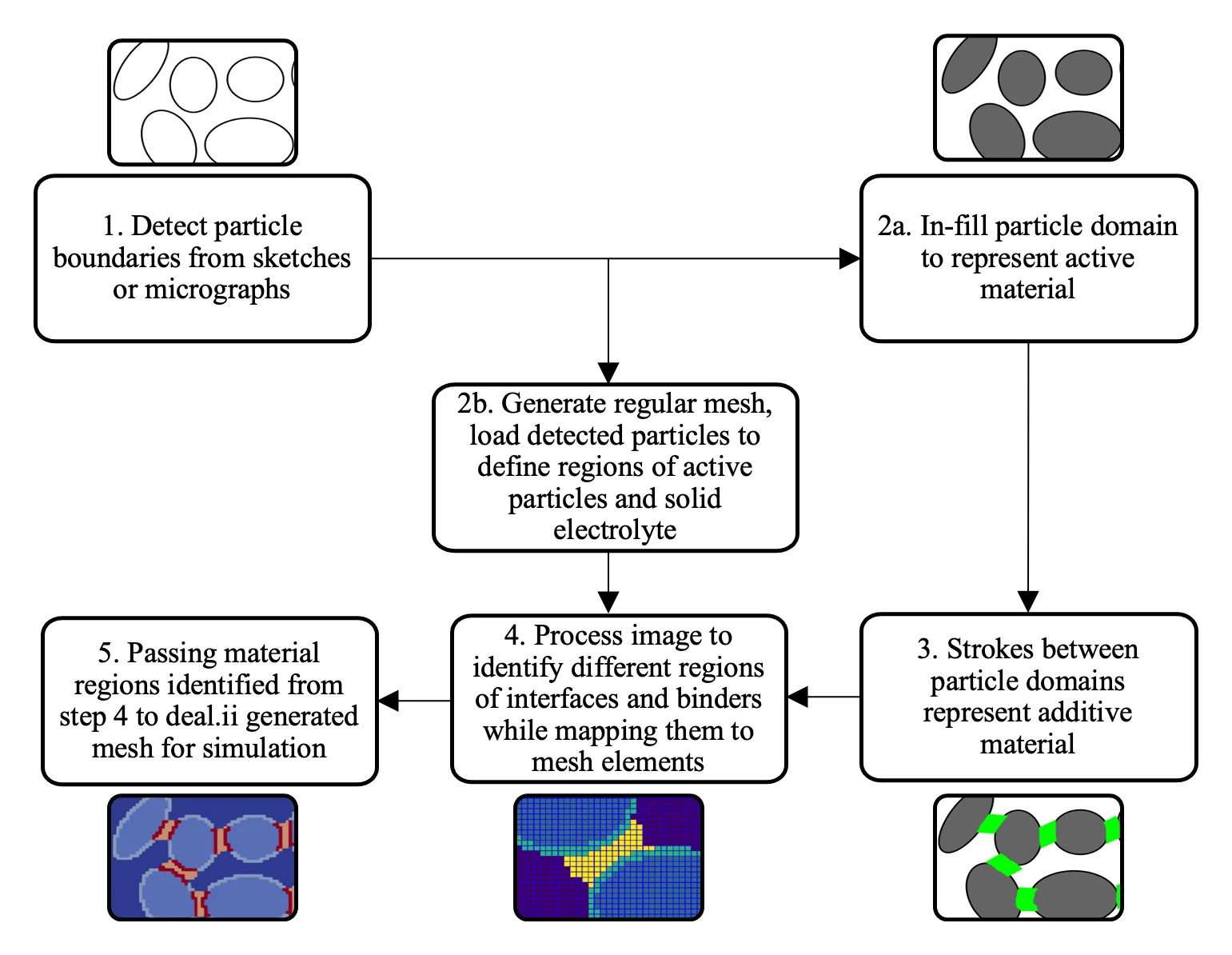
Image-to-simulation workflow
Particle boundaries and material regions were converted into solver-ready inputs instead of hand-built toy geometry.
Numerical method
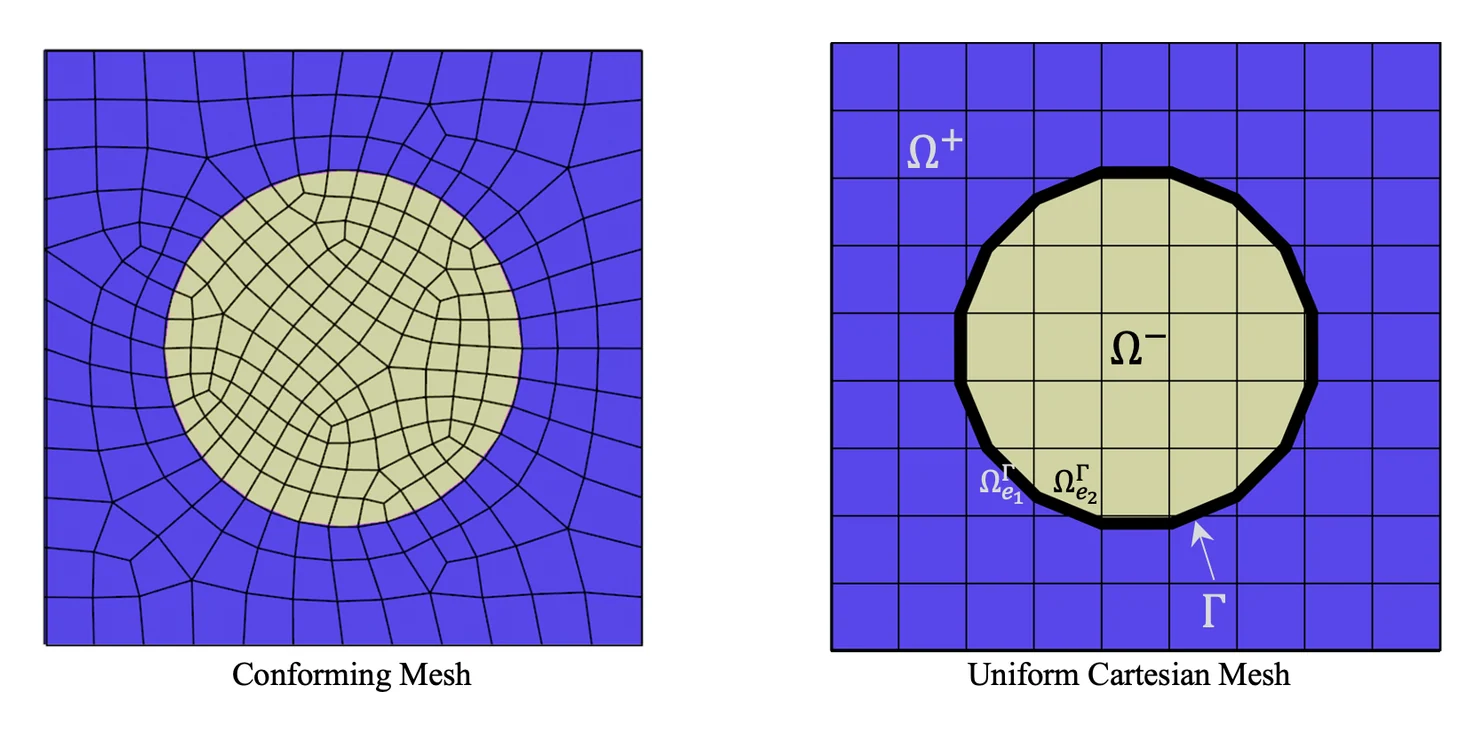
Cartesian mesh abstraction
The method avoids rebuilding a body-fitted mesh for every particle shape by representing interfaces inside a regular mesh.
Simulation result
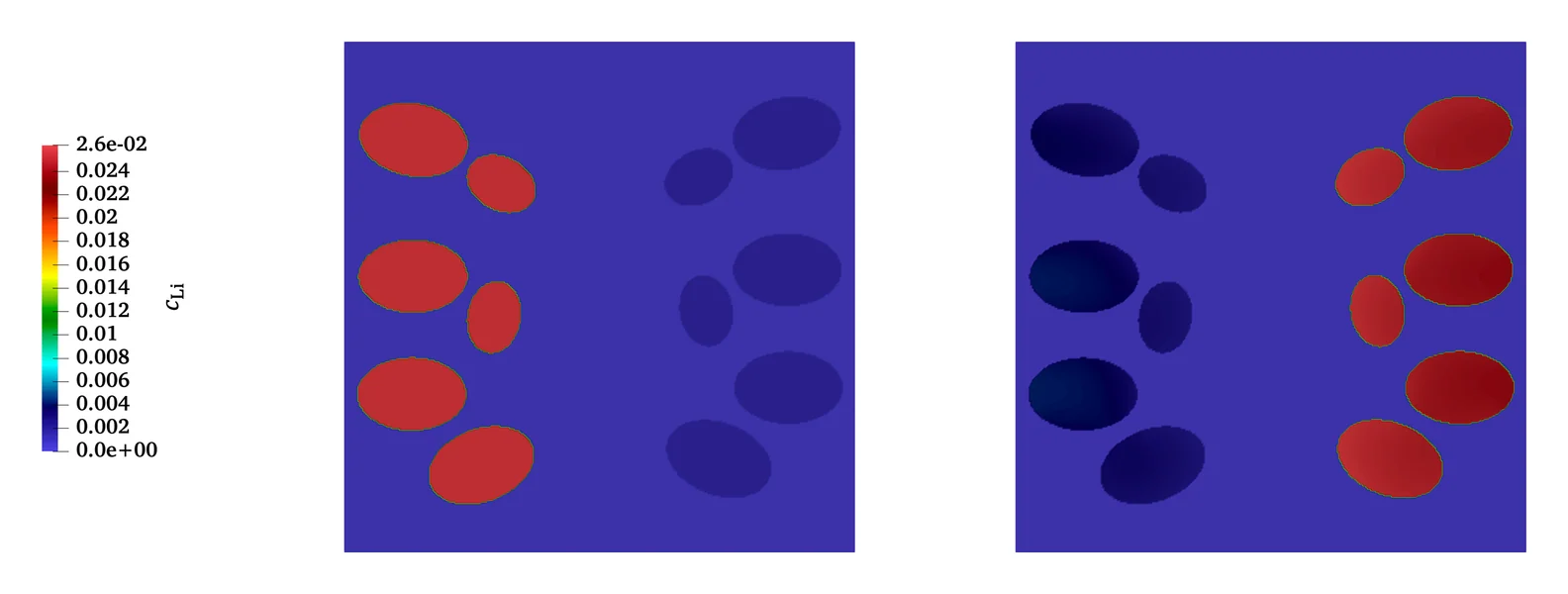
Interface fracture and degradation
The result visualizes how fracture at particle-electrolyte interfaces changes local concentration behavior.
The challenge
- Solid-state battery degradation involves coupled physical behavior across materials, interfaces, geometry, and operating conditions.
- Experimental microstructure imagery had to be converted into simulation-ready datasets before the physics could be studied computationally.
- The computational workflow needed to scale on HPC infrastructure using parallel solvers while preserving enough physical detail to be meaningful.
Research approach
Build simulation-ready data
Converted experimental microstructure imagery into datasets that could support automated meshing and particle-scale simulation workflows.
Model coupled degradation behavior
Built multiphysics simulation workflows for battery aging, including interface failure behavior and repeated operating-cycle analysis.
Scale computation
Used HPC infrastructure and parallel solvers so the simulations could move beyond small examples into larger computational studies.
Connect research to engineering judgment
Focused on making the model useful for reasoning about degradation mechanisms, not just producing a numerical result.
Outcomes
Research contribution
Contributed to a Toyota-backed battery aging simulation project and a peer-reviewed JMPS publication on interface fracture in solid-state batteries.
Computational framework
Built particle-scale simulation workflows, image-processing pipelines, automated meshing inputs, and HPC-enabled analysis loops.
Product foundation
Developed the computational engineering intuition that now helps me work with simulation, robotics, and SDK customers.
What I took away
Good computational research is not just a model that runs. It is a disciplined way to turn messy geometry, coupled physics, and numerical limits into evidence you can inspect and trust.
The work sharpened how I think about complex systems: build the right abstraction, preserve the important physics, and make the result legible enough that another engineer can reason with it.
Next case study